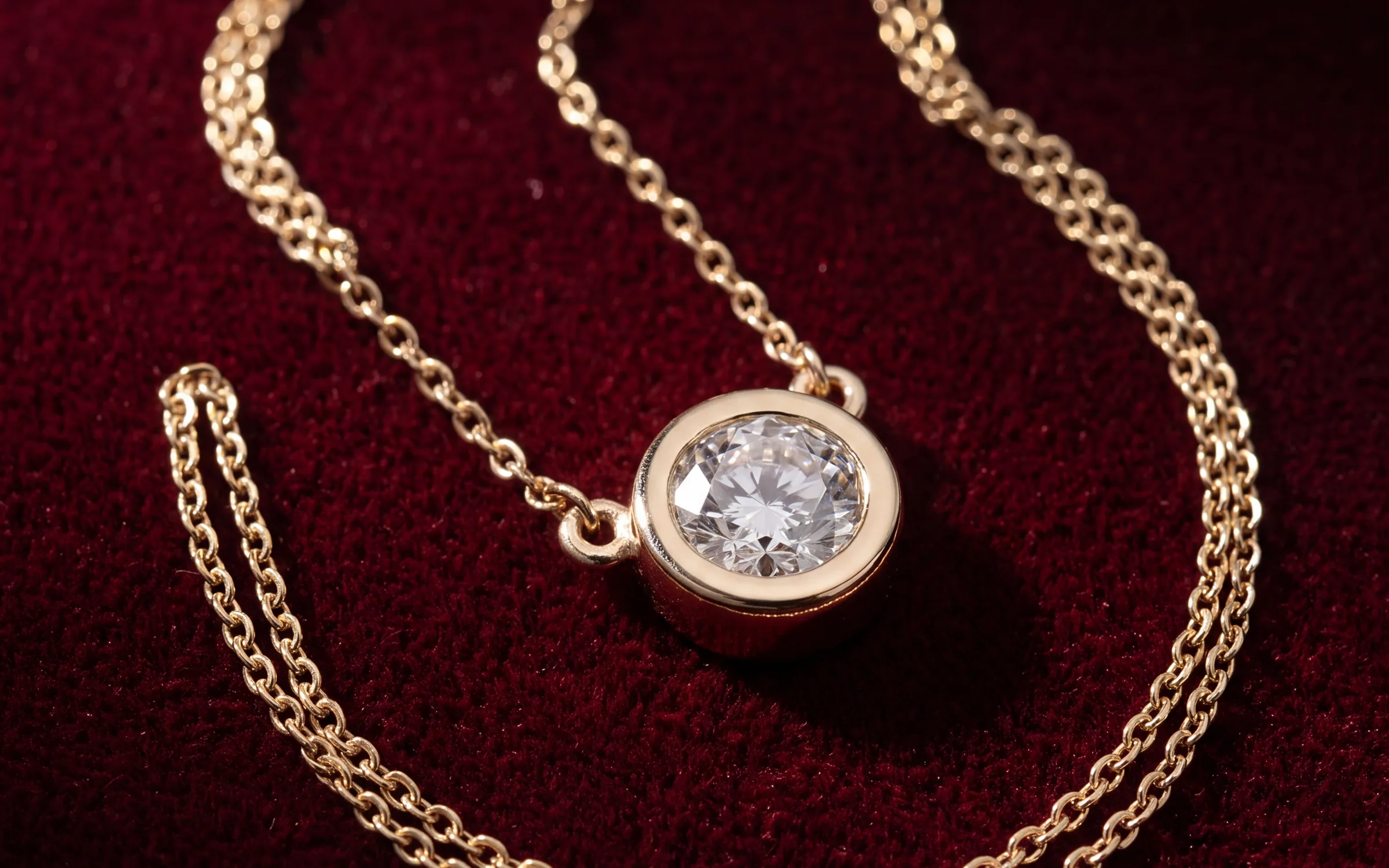
Necklaces give more trouble than any other piece at the photo table. The chain is long and thin, the pendant is small next to it, every link is a tiny mirror, and the whole thing kinks, twists and slides the moment you let go. A ring sits where you put it. A necklace has to be arranged.
Here is a method that works with a phone and a window, and the shots each necklace should have. For the basic setup, light and phone settings, see our jewelry photography guide.
Get the chain ready
- Clean the pendant and wipe the chain with a polishing cloth. Dust in the links shows up as grey specks.
- Hold the necklace by the clasp and let it hang for a minute. Most small kinks and twists fall out on their own.
- Lay it down with tweezers or a straight pin, not your fingers, so you don't leave prints on the pendant.
- Hide the clasp. Turn it to the back of the pendant, under the chain, or out of frame. A clasp in the middle of a main photo is a distraction.
- Check the bail. The pendant should face the camera straight on, not tilted on its bail.
Use a surface with a little grip, such as matte card stock, paper or a honed stone. Glossy board lets the chain slide, and it reflects the window.
Three ways to lay out a necklace
Full-length flat lay
The necklace laid flat in a soft U or teardrop shape, pendant at the bottom, both sides even. Shoot from directly above with the phone parallel to the surface, so the whole chain stays in focus. This is usually the main photo, because it shows the entire piece and works in any product grid.
Pendant close, chain out of frame
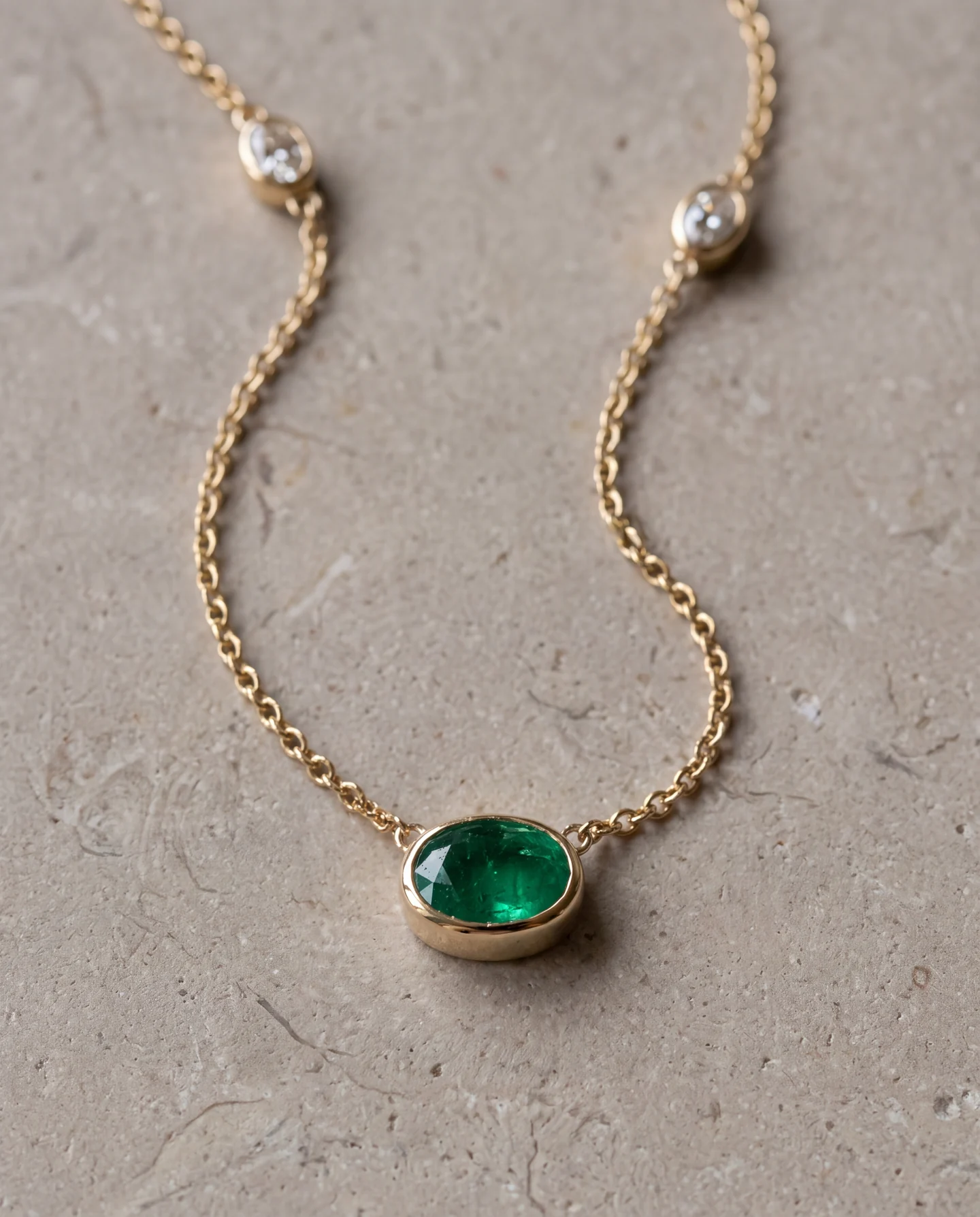
Get in close on the pendant and let the chain run off the edges of the frame in two gentle curves. This is the photo customers zoom on, so the pendant should fill much of the frame and be completely sharp.
Draped, on a neck form or worn
Flat lays can't show how a necklace hangs. A matte neck form in a neutral color, or a worn photo, shows the drape and where the length falls. Avoid shiny or dark velvet forms for the main photo. They reflect into the chain and make it hard to see the links.
Light for necklaces
Use one soft light from the side, a white card on the opposite side to fill the shadows, and the room lights off. Necklaces have the same problem as polished rings: with only white around them, the links go flat and grey. A black card just out of frame on one side puts dark edges on the links and makes the chain read as metal.
For a diamond pendant, add a small LED penlight from above to bring out the sparkle. For a colored stone, keep the light soft and check the color against the stone in your hand. Emeralds and sapphires shift color fast under warm light.
Keep the pendant sharp
Tap the pendant to focus, then hold to lock focus and exposure. In a close shot the chain can go soft toward the edges and that is fine. A soft pendant is not. Shoot from directly above for flat lays, because any tilt puts one end of the chain out of focus. Use the phone's 2x or 3x lens rather than moving very close, and never portrait mode, which smears a thin chain.
Show the length
The most common question about a necklace bought online is where it will sit. Answer it in the photos and the listing:
- A worn or neck form photo, so the customer can see the drop.
- One photo of the chain laid next to a ruler, if you don't have a worn shot.
- The length in inches in the title or the first line of the description, such as 18 inch.
- If the chain adjusts, a close-up of the extra jump rings and the lengths they give, such as 16 to 18 inch.
- The chain style and width in millimeters, such as 1.2 mm cable chain.
The shot list
- Full-length flat lay, clasp hidden.
- Pendant close-up, filling the frame.
- Worn or on a neck form, for length and drape.
- Detail of the bail and clasp.
- The back or side of the pendant, so the customer sees its thickness and how the stone is set.
- Any chain detail that matters, such as diamond stations or a paperclip link.
Portrait images, such as 4:5, suit necklaces better than square, because a necklace is taller than it is wide. Whatever ratio you pick, use it across the whole catalog. Our guide to Shopify product image size for jewelry covers the settings.
Mistakes to check for
- A twist or kink in the chain, which shoppers read as damage.
- One side of the chain longer than the other in a flat lay.
- The clasp in the middle of the frame.
- The pendant tilted or flipped on its bail.
- A chain so faint against a white background that the necklace looks like a floating pendant.
- Color shifted by warm room light.
From the photo you have to a studio photo
Laying a necklace well takes time, and a worn photo usually needs a model. Aurix Photo Studio starts from a photo you already have of the necklace and makes photos of it on a model or in a beautiful setting, with the pendant, stones and chain held to your photo. If you also sell rings, our guide on how to photograph rings covers the different problems they bring.
Want to see one of your own necklaces on a model or in a studio? Your first 10 photos are free, no card, at getaurix.ai.
Questions jewelers ask
What is the best way to photograph a necklace?
Take a full-length flat lay of the necklace in a soft U or teardrop shape on a plain surface, shot from directly above, then a close-up of the pendant with the chain running out of frame, then a detail of the clasp and bail. Add a worn shot or a neck form so the customer can see where the length falls.
How do I keep a chain straight for photos?
Wipe it, hang it for a minute to let the kinks fall out, then lay it with tweezers or a straight pin. Lay it on a surface with a little grip, such as matte card or paper, so it stays where you put it. Check that both sides are even before you shoot.
Should I photograph a necklace on a bust or flat?
Both, if you can. The flat lay is the clean main image and shows the whole piece. A matte neck form or a worn photo shows how the necklace drapes and where it sits, which a flat lay can't.
How do I show necklace length in photos?
A worn photo is clearest. Otherwise lay the chain next to a ruler for one photo, state the length in inches in the title or first line of the description, and add a simple length chart showing where 16, 18 and 20 inch necklaces fall.